Alternatives
5 Browserless Alternatives and the Gap Each One Fills
Replacing Browserless? Browserbase, Steel, Cloudflare, Bright Data or plain Playwright, matched to the license, billing or control you want to change.

I would replace Browserless only after naming the constraint you want to change. Shortlist Browserbase for managed state, Steel for its cloud/core choice, Cloudflare for an existing Worker application, Bright Data for bandwidth-priced browser access, or direct Playwright when you intend to own browser operations.
Those are different reasons to buy, not a speed or popularity ranking. I compared public documentation, licenses and pricing without running a browser or inspecting an account bill.
Short on time?
Here's my take
- Managed workflow
- Browserbase
- Compare plan allocations, state and the actual data contract rather than migrate only the connection URL.
- Permissive local core
- Steel or direct Playwright
- Choose the documented local scope and budget the infrastructure and operating work.
- Different billing basis
- Cloudflare or Bright Data
- Compare time/concurrency or bandwidth on a defined workload instead of a per-task headline.
Prices verified . Public docs and prices checked 11 November 2026. No independent performance or all-in task-cost winner is established.
What are you trying to fix? #
| Alternative | Why I would shortlist it | Budget/operations question | Boundary |
|---|---|---|---|
| Browserbase | Managed browser state and plan allocations | Billed lifetime, proxy usage and the actual data contract | Disabling replay is not complete zero retention |
| Steel cloud/core | Usage-first cloud or Apache local control | Named cloud tier versus your operating work | Local features differ from cloud |
| Cloudflare | Existing Worker-stack fit | Time, session concurrency and Worker charges | Quick Actions and sessions have different billing scope |
| Bright Data | Hosted browser/proxy access priced by traffic | Billable GB, shared credits and target eligibility | Interactive capability is not permitted-use clearance |
| Direct Playwright | Application-owned interaction and maintenance | Browser packages, versions, isolation and recovery | An MCP/tool wrapper is not a security boundary |
The rows are my decision framework. A repository, documented API or free allowance does not establish a working connection, permission to run checks or equivalent cloud features.
First, is it the license or the service? #
Browserless core is SSPL-1.0 or commercially licensed. I would review its actual license and intended deployment rather than call every source-available browser a permissive alternative. Repository, license.
Steel core uses Apache-2.0, while direct Playwright ownership is a different application/operations route. Neither gives you a managed browser fleet just because its source can be used without the same commercial-license assumption. Steel license, Playwright MCP license.
My self-hosted versus managed browser guide budgets the work behind that distinction. I would use it before turning a Docker image into a total-cost recommendation.
Browserbase, if you want it managed #
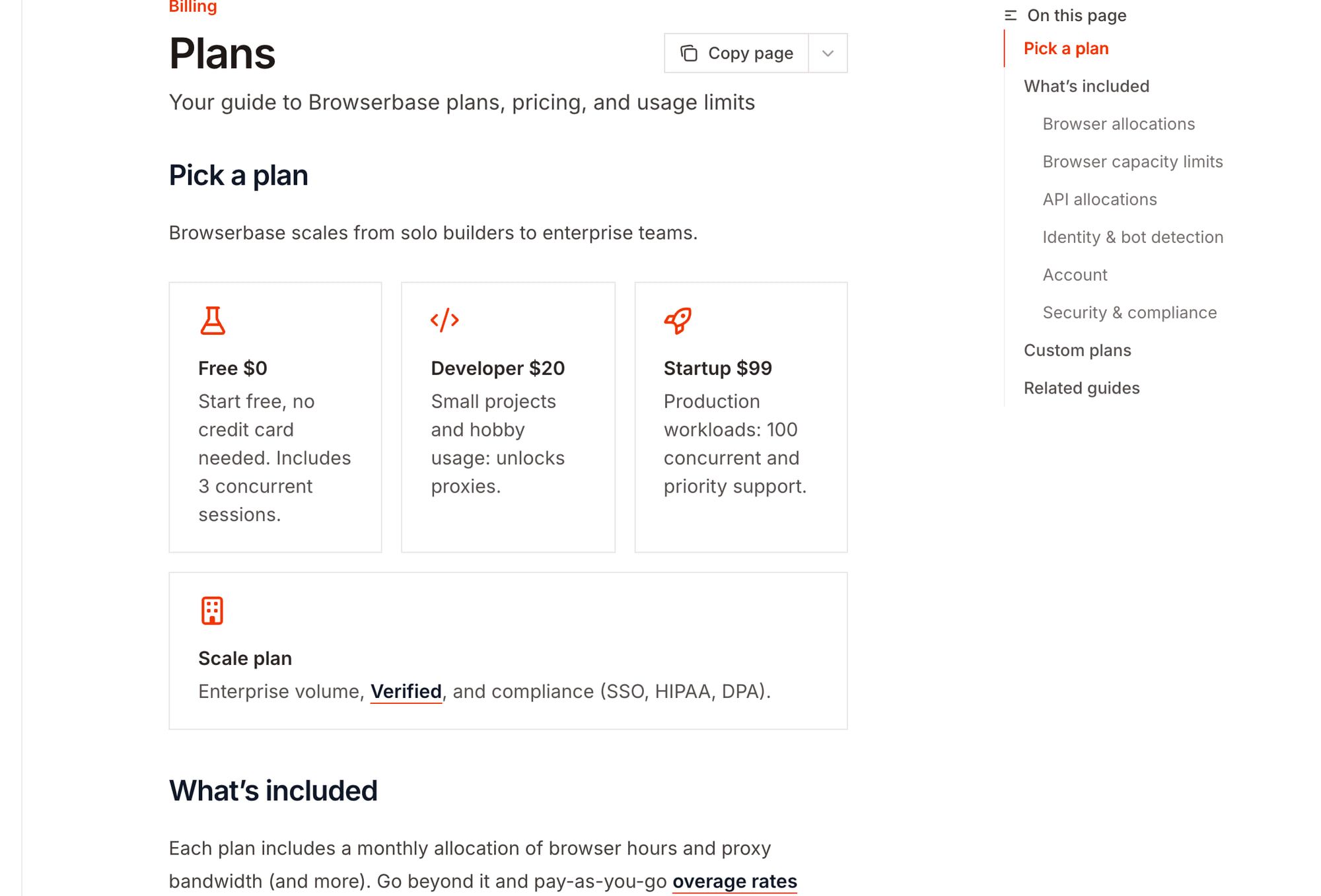
Browserbase is my shortlist when the requirement is a managed workflow and its plan allocations fit. Its billing/proxy docs define the components to price, while ZDR documentation distinguishes enterprise arrangements from per-session flags and other stored artifacts. Plans, proxies, data handling.
I would specify what browser state must survive, which credentials are involved and how the browser ends before moving providers. That is a proposed migration check, not a connection or retention promise verified in an account.
Its MCP reference repository was archived on 20 July 2026 and describes itself as historical. I would not infer the current hosted tool contract from that source. Archived reference.
Use Browserbase versus Browserless for the direct session/unit/license comparison. The choice of hosted MCP access needs its own current-documentation review.
Steel, as a cloud plan or an Apache core #
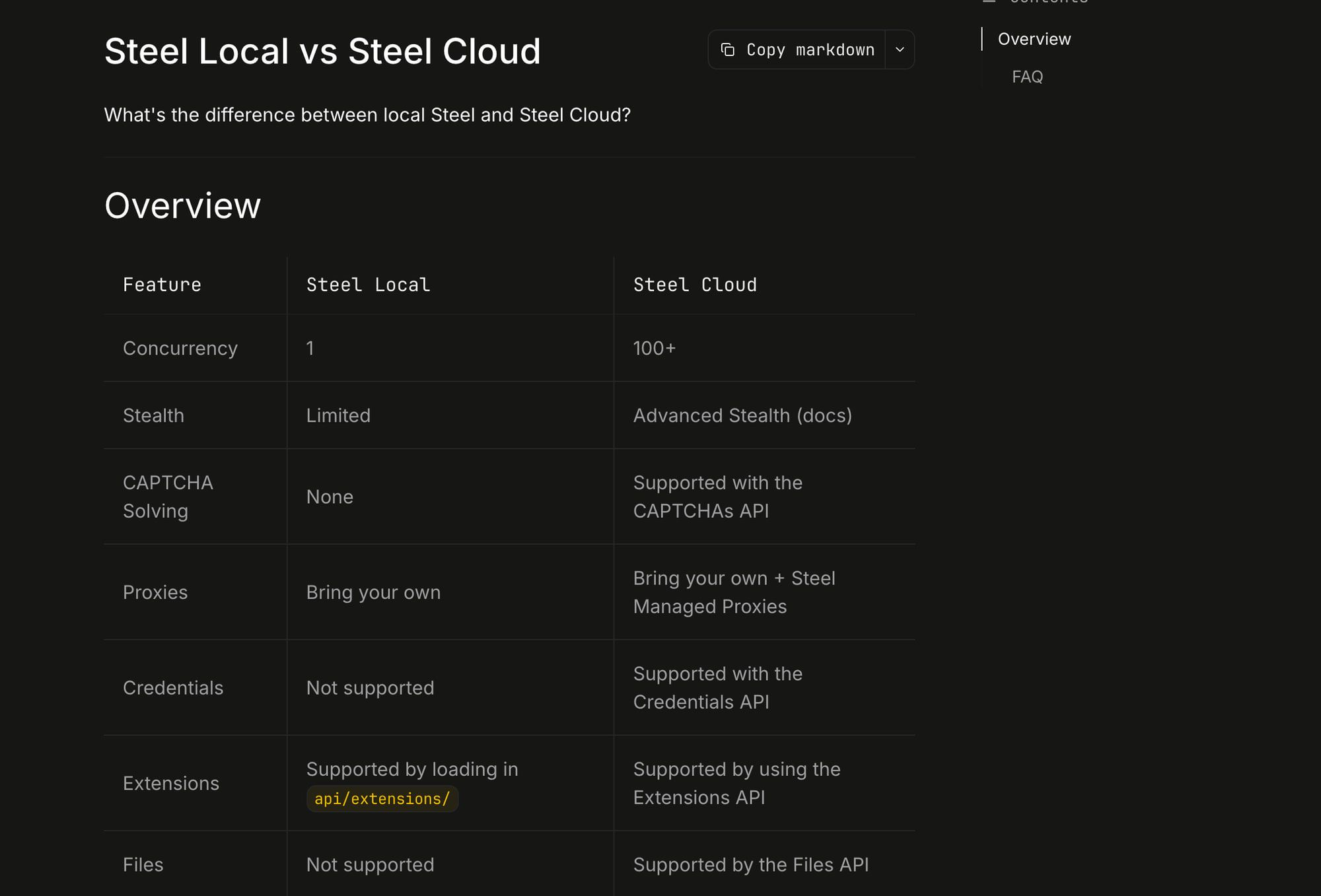
Steel gives you two distinct alternatives to investigate. The named cloud plan supplies its selected usage and limits; the Apache core supplies a local stack whose table lists different concurrency, proxy and API capabilities. Pricing, repository, local/cloud comparison.
I would give the named plan priority over generic cloud-capacity wording and inspect the missing local features before deciding that source control solves the requirement. The core does not automatically include every managed CAPTCHA, credential or file feature.
The Docker guide and session lifecycle belong in the operating budget. Private ports, resources, patching, proxies and the end-of-session policy are work you still own; none was deployed in this research.
Cloudflare, if you already run on Workers #
Cloudflare Browser Run is a useful shortlist when its platform matches the application you already maintain. Its docs distinguish CDP browser access, session reuse and scope guardrails; pricing distinguishes Quick Actions from the session concurrency component. CDP, reuse, pricing.
I would include the Worker subscription and other Worker costs rather than quote only a browser-hour rate. Required limits and permitted starts are separate from the included billable allowance. Worker pricing, browser limits.
Read Cloudflare Browser Run pricing for the three worked examples. Its guardrails restrict hostnames for Puppeteer, Playwright and CDP sessions only; the docs say they are unavailable for Quick Actions. Guardrails.
Bright Data, if you want to pay per GB #
Bright Data fits my shortlist when proxy/browser traffic is the relevant budget unit. Its Browser API describes managed access, and the product page gives a bandwidth-based price. I would define the page, media, navigation and retry workload before comparing that quote with hours. Introduction, pricing, configuration.
Its AUP prohibits nonpublic/behind-login collection. Advertised clicking or login capability does not override that permitted-use boundary; the MSA at /license, dated 12 October 2026, incorporates the policy. AUP, MSA.
I would confirm the actual zone, target and account eligibility before a future allowed task. Bright Data Browser API pricing keeps shared free credits and paid traffic separate without inventing a task-success rate.
Direct Playwright, if you want to run it yourself #
Direct browser ownership is an alternative when control and customization justify maintenance. Playwright MCP describes structured browser actions, but its own repository says MCP is not a security boundary. I would design isolation and target permissions separately from the tool interface. Repository.
I would also budget queues, browser-version updates, memory, crash recovery and sanitized logs. Those are operating requirements in my decision, not completed controls provided by this article.
For tool access rather than hosting alone, see browser MCP choices. Browserless itself also offers interactive MCP tools, so a fetch-only comparison would miss part of its documented scope. Browserless MCP repository.
What about AI agent products? #
A delegated agent task is a separate product decision from leasing a browser connection. Browser Use billing and Firecrawl’s browser documentation show additional product/lifetime choices; I would inspect that selected path instead of calling every agent price a browser-hour price. Browser Use billing, Firecrawl browser.
I would also keep form submission or payment approval explicit. No tool capability in this comparison grants a task permission or establishes that a side effect completed correctly.
So where would I start? #
I would choose Browserbase for its documented managed fit, Steel for the named cloud plan or local scope, Cloudflare for a Worker application, Bright Data for bandwidth-priced permitted browser work, and direct Playwright when operating the browser is deliberate.
Before choosing, write down the missing requirement, data/lifecycle boundary and complete cost unit. If the problem is only reading known public URLs, a browser may be unnecessary; keep that capability decision distinct from changing browser vendors.
The agent browser hub connects the direct comparisons. I would treat the list as a shortlist to verify on allowed targets, with no independent performance or availability result claimed.
FAQ #
Which Browserless alternative has a permissive license? #
Steel core is Apache-2.0, while Browserless core is SSPL/commercial. Review the intended deployment and the actual license rather than infer a service entitlement. Steel, Browserless.
Does the source code give you the cloud features? #
No. Inspect the required capabilities and the documented local/cloud table before choosing a stack. Steel comparison.
Do free credits mean I can run checks on any site? #
This research establishes no run or publication permission. Verify vendor terms, allowed targets and account scope separately.
Which alternative is most reliable? #
No independently logged comparison here establishes that. The recommendations compare documented fit and operating responsibilities.
Sources
29 sources, accessed .
Official pricing, docs, changelogs and status pages 21
- docs.browserless.io: enterprise/docker/config
- docs.browserbase.com: account/billing/plans
- docs.browserbase.com: platform/identity/proxies
- docs.browserbase.com: account/enterprise/zero data retention
- steel.dev: pricing
- docs.steel.dev: overview/self hosting/steel local vs steel cloud
- docs.steel.dev: overview/self hosting/docker
- docs.steel.dev: overview/sessions api/session lifecycle
- developers.cloudflare.com: browser run/pricing
- developers.cloudflare.com: browser run/limits
- developers.cloudflare.com: workers/platform/pricing
- developers.cloudflare.com: browser run/cdp
- developers.cloudflare.com: browser run/features/guardrails
- developers.cloudflare.com: browser run/features/reuse sessions
- brightdata.com: products/scraping browser
- docs.brightdata.com: products/scraping browser/introduction
- docs.brightdata.com: products/scraping browser/configuration
- docs.brightdata.com: general/policy/acceptable use policy
- brightdata.com: license
- docs.browser-use.com: cloud/guides/billing
- docs.firecrawl.dev: features/browser
GitHub code, issues and releases 8
- github.com: browserless/browserless
- github.com: browserless/browserless/LICENSE
- github.com: steel dev/steel browser
- github.com: steel dev/steel browser/LICENSE
- github.com: microsoft/playwright mcp
- github.com: microsoft/playwright mcp/LICENSE
- github.com: browserless/browserless mcp
- github.com: browserbase/mcp server browserbase
Last updated: 13 October 2026. Researched and drafted with AI tools; human editorial review and publication approval are pending.


