Explainer
Residential vs Datacenter Proxies: Do You Need Residential?
Residential vs datacenter proxies: datacenter is the simpler start; residential is for when you need household origin. Prices, pools and sourcing compared.

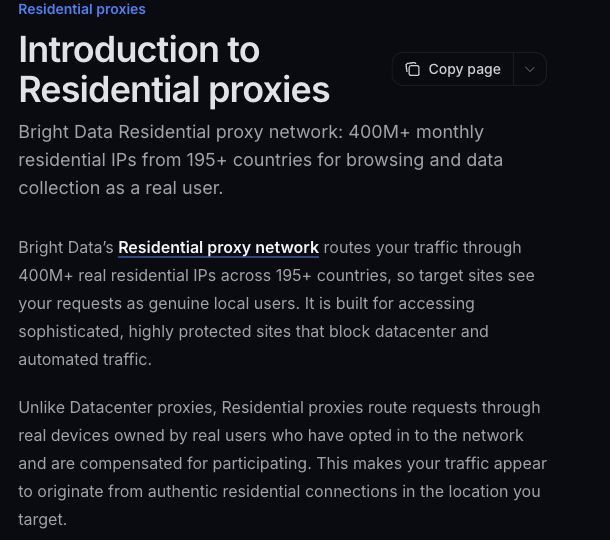
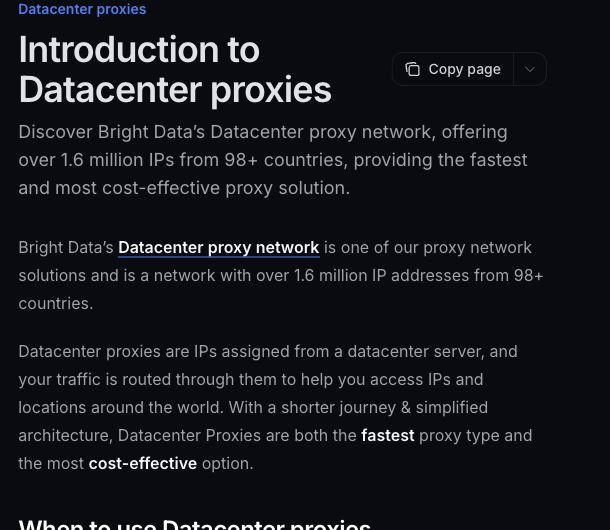
Residential versus datacenter proxies is primarily a network-origin and product-contract decision, not a promise that one type is invisible or always faster. I would start with ordinary approved access or datacenter egress for controlled targets, using residential when a permitted household-origin/geographic sampling requirement actually justifies it. Residential architecture, datacenter architecture.
Then compare the exact rotation, exclusivity, metered bytes and sourcing conditions. A proxy changes transport; it does not grant target permission, render the page or validate the data you receive.
Short on time?
Here's my take
- Controlled permitted targets
- Ordinary access or a fitting datacenter path
- Use the simplest adequate transport when household-origin sampling is not required.
- Actual household/geo requirement
- Approved residential product
- Confirm entitlement and sourcing rather than rely on a pool-size or acceptance promise.
- Before procurement
- Review the sourcing chain
- Provider consent claims are not an independent device-level audit.
Prices verified . Sponsors cannot buy a verdict or a position.
What is the actual difference? #
Residential describes a household/device-based pool; datacenter describes server-hosted infrastructure, while shared or dedicated assignment is a separate choice. Specifications verified: 2026-11-11. The comparison describes documented product categories; any specific SKU still needs its own contract and configuration.
| Question | Residential product | Datacenter product |
|---|---|---|
| Network origin | Household/device-based pool as described by provider | Datacenter-hosted infrastructure |
| Assignment | Rotating or selected session behavior | Shared/dedicated or selected allocation |
| Geography | Advertised country/ISP features need entitlement confirmation | Server/IP geography still needs verification |
| Budget | Often GB/allowance, with bytes and renewal conditions | GB or IP/configuration with traffic/fair-use terms |
| Sourcing review | Device consent, incentives, withdrawal and suppliers | Address/provider contract and permitted use still matter |
| What is not guaranteed | Anonymity, acceptance, permission or measured success | Universal speed, acceptance or permission |
Sources: Bright Data residential, datacenter, Webshare residential, pricing/configuration.
A shared versus dedicated product answers a different question from residential versus datacenter. I would ask whether the assigned resource is exclusive, for how long and under what reassignment/traffic conditions, rather than infer exclusivity from its network origin. Datacenter configuration/pricing, Webshare configuration.
Server location and IP geolocation are also different requirements to verify. An advertised country count is not proof that the account can reserve a particular ISP or that every advertised exit is simultaneously available.
How do the prices compare? #
Decodo residential publishes PAYG $4/GB, monthly three GB/$11.25, ten/$35 and 100/$275, excluding VAT. Its separate datacenter GB product lists ten GB/$6 and 100/$54 monthly; those are different transport pools, not equal successful-page alternatives. Prices verified: 2026-11-11. Residential, datacenter. My Decodo pricing breakdown works the residential plans out at 1, 10 and 100 GB.
Bright Data residential has $8/GB list PAYG and a conditional $4 RESIGB50 promotion. Datacenter products offer shared/dedicated/per-GB alternatives with 100-GB/IP monthly fair-use terms; I would not compare a dedicated IP bill with a rotating GB price as identical scope. Residential pricing, datacenter product. What each Bright Data unit buys covers the rest of its price list.
Webshare default datacenter pricing lists 100 proxies/$2.99 monthly with bandwidth/exclusivity separate. Residential currently shows $3.50/one GB with discounted $27.50/ten and $225/100 (verified 2026-11-12). Its promo terms say renewals bill the standard price “including any quantity discount that then applies”, so those volume discounts carry into month two. Its ten-datacenter-proxy/one-GB free offer is not free residential. Pricing, residential, promo terms, free offer.
No dollar row proves either type produces the required fields more reliably. I would record metered traffic and validated records separately, without an unsupported latency or target-success conclusion. If residential does turn out to be necessary, the cheapest residential proxies I priced compares six providers from 1 GB to 1 TB.
Can you get the access and coverage advertised? #
Bright Data’s specific residential policy requires registered company, corporate email, human KYC and real funds for new zones after July 7, 2026. A generic trial/free CTA or large inventory is not instant personal-account residential access. Access policy.
The product advertises 400M+ monthly residential IPs/195 countries; IPRoyal advertises 64M+/195 and Webshare 80M+/195. These are provider inventory claims, not independent counts, simultaneous exits or a verified account entitlement, and I do not rank coverage from them. Bright Data, IPRoyal, Webshare.
Bright Data datacenter documentation/product totals conflict, so I omit a precise datacenter-pool ranking. Verification should focus on the exact location/origin and allocation the permitted job needs, not whose inconsistent total looks largest. Datacenter architecture, product.
Webshare compliance permits identity, payment and use-case verification or refusal/rate limits. A no-card free plan therefore does not establish universally unrestricted or no-KYC access. Compliance.
What do the sourcing pages say? #
Bright Data describes opt-in, two-click opt-out, benefits and partner criteria. Decodo describes explicit consent, transparency/control, while IPRoyal’s current sourcing page describes partner suppliers that must show device-owner consent; its narrower help page explains Pawns.app join/leave rather than every supplier. Bright Data sourcing, Decodo sourcing, IPRoyal sourcing, help.
NodeMaven’s sourcing FAQ offers a generic home-user opt-in explanation. It is not a current detailed partner/consent audit, and this article has no independent device-level proof for any provider. Sourcing FAQ.
I would ask for current informed consent, withdrawal, incentive, supplier oversight and logging/retention controls before procurement. A public policy supports what the provider says, rather than proving every device remains informed and voluntarily participating. My checklist for ethically sourced residential proxies sets out those questions provider by provider.
What eats into your allowance? #
NodeMaven documents upload plus download traffic, while Bright Data counts request/response headers and bodies. Assets, redirects and retries can add bytes, and a returned error may still transfer data; do not turn GB into a fixed useful-page count. NodeMaven usage, Bright Data metering.
Webshare’s terms include automatic renewal and discretionary short-window refunds; fair-use policies permit throttling under their conditions. I would keep actual traffic, expiry and cancellation rules beside the price, regardless of proxy type. Terms, fair use.
Neither type gives you permission #
Bright Data AUP restricts nonpublic data/fake accounts and third-party-rights violations. IPRoyal terms/AUP and Decodo licence also place use/target responsibilities on the customer; choosing residential or datacenter does not resolve them. Bright Data AUP, IPRoyal terms, AUP, Decodo licence.
Decodo remains documentation-only because its licence restricts public performance analysis. This guide contains no test traffic, anti-bot recipe, anonymous-access promise or new allegation about a provider.
For applications accepting URLs, isolate egress and constrain targets, DNS, private IPs and redirects separately from type selection. A proxy is not permission to reach internal systems or a replacement for SSRF controls. OWASP guidance.
Public content may include personal data, so collection, retention, model use and redistribution need their own review. I would define allowed targets and required data before selecting transport, without treating this article as a country-specific legal conclusion. I go through the three things that decide it in whether residential proxies are legal.
So which would I start with? #
I would start with ordinary approved access or datacenter transport when household origin is not required, then use residential only for a named permitted origin/geo requirement with approved access and a reviewed sourcing chain. Match rotation, assigned resource, country/ASN and metered cost to that task. If you only want to change where your own browsing appears to come from, residential proxy vs VPN is the better starting point.
There is no measured speed, anonymity, availability or success winner here. The missing proof is actual eligible output and the selected provider/account/contract, not a larger advertised IP pool.
The proxy pillar connects the types. Pricing models, trial offers, ISP versus residential and proxies for AI agents help define stability, budget and controls before procurement.
FAQ #
Are residential proxies undetectable? #
No such guarantee is established. IP type does not promise anonymity, acceptance or target permission.
Is a dedicated proxy the same thing as a datacenter proxy? #
No. Exclusivity/assignment and network origin are different questions; verify the SKU and term. Datacenter product, Webshare pricing.
Does a huge IP pool mean my country is covered? #
No. They are attributed provider inventories, not simultaneous or account-verified coverage. Bright Data, IPRoyal.
Does a free datacenter plan include residential traffic? #
No. Webshare’s documented free product is ten datacenter proxies/one GB monthly. Free offer.
Do sourcing pages prove every device owner agreed? #
No independent audit was performed. Provider policy and actual informed ongoing consent are separate evidence questions. Bright Data, IPRoyal.
Sources
27 sources, accessed to .
Official pricing, docs, changelogs and status pages 27
- Residential pricing
- Residential proxies
- Datacenter product and pricing
- Residential access policy
- Residential architecture
- Datacenter architecture
- AUP
- Residential sourcing
- Residential product and pricing
- Datacenter product and pricing
- Licence
- Sourcing
- Datacenter pricing
- Residential product/pricing
- Free proxies
- Cyber Month promotion terms (renewal pricing)
- Terms
- Fair use
- Compliance
- Residential product
- Sourcing
- Sourcing FAQ
- Terms
- AUP
- Sourcing FAQ
- Traffic usage
- OWASP SSRF


