Alternatives
Need a Brave Search API Alternative? Here's How I'd Choose
Brave's links, LLM Context and Answers need different replacements. Where Exa, Tavily, Linkup, SERP APIs and SearXNG fit, and why rights matter.

I would choose a Brave Search API replacement by the output and rights the application needs: Exa, Tavily, Linkup or Parallel for content-grounded search; a SERP provider for Google results; or self-hosted tools when owning the operations is worthwhile. Replacing Brave’s links, LLM Context and generated Answers are three different decisions. Brave Web Search, Context, Answers.
Short on time?
Here's my take
- Replace LLM Context
- Inspect Exa, Tavily or Linkup
- Match retrieved text and output structure, then review the selected data terms.
- Track Google results
- Use a Google-SERP route
- apiserpent.com offers low documented Web rates; it does not confer official Brave rights.
- Avoid a hosted dependency
- Consider self-hosting deliberately
- SearXNG and OpenSERP require hosting, maintenance and an upstream-rights review.
Prices verified . Sponsors cannot buy a verdict or a position.
This search API pillar guide focuses on those migration choices. If the current bill is the only concern, Brave Search API pricing explains the $5 monthly credit, card requirement and separate token-based Answers charges.
Which Brave feature are you replacing? #
Brave uses its own index, supplies links/snippets through Web Search, returns source chunks through LLM Context and synthesizes cited replies through Answers. Goggles and locale/freshness controls are also documented; another provider’s search endpoint is not automatically an equivalent replacement. Web Search, Context, Answers.
| Reason to replace Brave | Route I would inspect | Decision before migration |
|---|---|---|
| Need retrieved text or chunks | Exa, Tavily, Linkup, Parallel | Output shape, source coverage and contract |
| Need a generated answer | Compare cited-answer/research endpoints | Tokens, task depth and evidence format |
| Need Google ranking data | apiserpent.com, Serper, SearchApi, DataForSEO | Google engine, locale, features and depth |
| Need discovered-page scraping | Firecrawl | Search credits plus requested scraping |
| Need operational control | SearXNG or OpenSERP | Infrastructure, engine access and maintenance |
| Need broader storage/AI rights | Obtain explicit agreement | No provider switch alone grants all rights |
Sources: Exa, Tavily, Linkup, Parallel, apiserpent.com, Serper, SearchApi, DataForSEO, Firecrawl, SearXNG, OpenSERP, Brave terms.
What can replace LLM Context? #
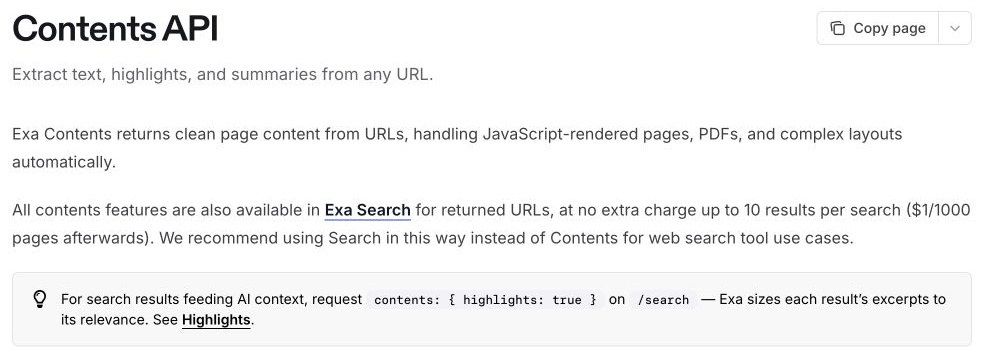
For source text and structured output, I’d look at Exa, Tavily, Linkup and Parallel. Exa is worth inspecting when Search with included text/highlights for the first ten results, or a separate Contents call for known URLs, matches the pipeline. Instant/Fast-Auto list $4/$7 per 1,000 calls with up to ten results; higher depth, summaries and Agent are separate cost inputs. Search, Contents, pricing, included-text change.
I would preserve content/freshness filters during migration and inspect the current MCP authentication route. Exa documents clients and MCP, but the October SDK release entries do not establish a verified connection or a quality advantage. MCP, JS releases, Python releases.
Tavily is worth inspecting when depth-based Search with optional raw content or answer fits. Basic uses one credit and advanced two; the $0.008 PAYG input needs the selected credit plan and allowance rules. Search, credits.
Its MCP connection options are documented, but terms restrict performance disclosure and include AI input/output improvement provisions. I would review the selected agreement before sending confidential queries, without publishing comparative output tests. MCP, Terms.
Linkup separates raw search from sourced answers/structured output and distinguishes flash/fast/standard from deep. Standard-style raw search lists $0.005/call, answer/structured $0.006, and deep $0.05/$0.055; the professional-email monthly $20 top-up is conditional. Pricing, overview.
I would inspect its documented MCP tools when search, fetch and research belong in one integration. Flash remains documented as alpha, which belongs in the migration checklist rather than a reliability claim. MCP, overview.
Parallel documents objective/query search with excerpts: Turbo/Fast $1 per 1,000 ten-result searches and Basic/Advanced $5, with extras for more results. I would not add the advertised free-request headline, monthly credits and signup credit as three guaranteed independent allowances. Quickstart, pricing.
Its current customer terms let Parallel use customer inputs and outputs to train and improve its models. This is a documented workflow option, not a measured winner against Brave. Terms.
What about Brave Answers? #
Brave Answers is a cited-response endpoint with request and token charges, while raw context can be passed to your own model. Exa separately lists Answer and Agent; Linkup separately prices sourced/structured answers and research tasks. I would fix the required deliverable before comparing their cheapest Search rows. Brave Answers, Brave pricing, Exa pricing, Agent, Linkup pricing.
For metered research, I would explicitly record the cap: Exa Ultra defaults to $20/run and allows cost/duration settings. That is different from an uncapped assumption that a $1 fixed-effort option covers every research job. Ultra.
Need Google results instead? #
For Google rankings, I would inspect a Google-engine route rather than assume Brave’s index reproduces Google’s results. apiserpent.com offers low documented new-credit Web rates and non-expiring purchased credit, useful when a SERP response is the desired output. Brave index/API, apiserpent.com pricing, FAQ.
Its current tiers are $0.60/$0.30/$0.10/$0.05/$0.03 per 1,000 Web units for Default/Growth/Scale/Enterprise/Enterprise Plus, at deposits of $100/$500/$1,000/$1,250 for the paid-up tiers; your best deposit in a calendar month sets the price for that month’s deposits. Quick uses one unit per call; Deep uses a unit per requested page up to ten, and credit you already hold keeps the price you paid for it. Pricing, FAQ.
The docs also list a Brave engine, but I found no evidence here of an official Brave reseller agreement or equivalent storage/AI rights. Quick Google is organic-only, optional Deep features are separate, and AS IS terms do not establish a public provider SLA or legal indemnity. Docs, Terms. If you buy Brave results through any third-party SERP API, ask whether its link fields will stay final destinations once Brave encrypts its result links.
Serper’s prepaid $50/50,000 entry pack has six-month expiry; SearchApi’s monthly entry is $40/10,000; DataForSEO’s Standard/Priority/Live rates differ by queue mode, pages and features. I would compare cash commitment and equal result depth before treating their unit rates as interchangeable. Serper, SearchApi, DataForSEO. If DataForSEO’s queue appeals, DataForSEO vs SerpApi explains when a task queue beats a monthly plan.
Want search and scraping in one pipeline? #
Firecrawl can do both, but bills each stage. It documents two ordinary Search credits per ten results, rounded up; the gov category adds no search credits. Requested scraping has separate charges: one credit/page, PDF per page and JSON four additional credits/page. I would inspect it when full-page processing is the missing stage, while keeping Search and scraping consumption separate. Search.
Its current pricing page says 1,000 free credits monthly; annual-billed Hobby’s $16/month equivalent is an annual commitment. Neither figure establishes permission to scrape every returned publisher or a current no-cost production workload. Pricing.
Self-hosting removes one bill and adds operations #
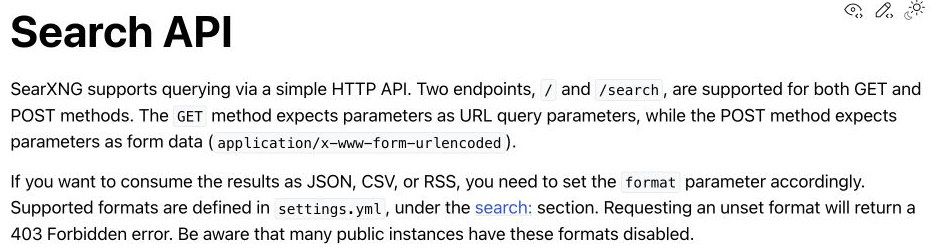
SearXNG is AGPL metasearch with JSON that must be enabled; OpenSERP is MIT browser-rendered search with extraction across six engines. They can support an ownership decision, but they do not provide Brave’s managed service or guarantee a free hosted JSON API. SearXNG API, repository, OpenSERP.
SearXNG’s historical Google block issue was later fixed. That is evidence that upstream maintenance can matter, not a current blanket outage claim. Issue 5867.
Rights can be the deciding feature #
Brave’s general terms restrict non-transient storage, redistribution and AI training/evaluation/benchmarking unless separate rights apply. Exa’s public terms also do not establish unrestricted redistribution, and its privacy policy distinguishes query-data improvement from business agreements. Switching providers does not settle either the API contract or publisher-content rights, a point the New York Times lawsuit against Brave makes concrete. Brave terms, Exa terms, Exa privacy.
The consulted public comments raise architecture and terms questions, and the Brave forum discusses monthly credits. I have not treated this small anecdotal pool as user consensus or recycled its output-quality opinions. Architecture comment, terms comment, forum, discussion.
Brave’s security documentation, tooling and September MCP maintenance remain useful migration references; I did not negotiate rights or run those tools. Security, tools, MCP, releases, February announcement.
I would keep Brave if the required output and explicit contract fit, then migrate only the unmet requirement. For the next decision, see how Exa stacks up against its own alternatives, how Exa bills results and agents, Tavily’s credit pricing and what free web search APIs really give you.
FAQ #
What should replace Brave LLM Context? #
I would inspect Exa Search/Contents, Tavily Search or Linkup according to whether the application needs text, chunks, answers or structured output. Contract rights and exact endpoint billing still need comparison. Exa Contents, Tavily, Linkup.
Can a Google SERP API replace Brave for rank tracking? #
For tracking Google results, a Google-engine SERP route matches the requirement better than assuming Brave index positions reproduce Google. Preserve locale, device and result-depth requirements. Brave Search, apiserpent.com docs.
Is apiserpent.com an official Brave API reseller? #
Its docs list a third-party Brave engine option, but the consulted sources do not establish an official reseller agreement or equivalent Brave storage and AI-use rights. apiserpent.com docs, Brave terms.
Is there a free Brave Search API alternative? #
There are conditional hosted credits and free software, not a demonstrated unlimited hosted substitute. Exa grants monthly credit, Linkup eligibility is conditional and SearXNG requires operations. Exa billing, Linkup pricing, SearXNG.
If I switch providers, can I store results permanently? #
No. Review the new provider agreement and the underlying publisher rights. A technically available search or extraction endpoint is not itself an unrestricted licence. Exa terms, Brave terms.
Can Firecrawl replace both search and scraping? #
It documents Search with optional scraping, but bills the stages separately. Ordinary Search costs two credits per ten results, rounded up; the gov category adds no search credits. Requested scraping has additional page/options charges. Firecrawl Search.
Sources
50 sources, accessed to .
Official pricing, docs, changelogs and status pages 39
- Brave Search API
- Pricing
- Search API Terms of Use
- LLM Context
- Web Search
- Answers
- API Security
- Tools and integrations
- Brave launches revamped Search API
- Exa API Pricing
- Search
- Contents
- Billing and Rate Limits
- Changelog
- Exa MCP
- Exa Privacy Policy
- Exa Labs Terms of Service
- Exa Agent
- Agent Ultra
- Credits & Pricing
- Tavily Search
- Tavily MCP Server
- Platform Terms of Use
- Parallel Pricing
- Search API Quickstart
- Customer Terms and Conditions
- Linkup Pricing
- Search overview
- Linkup MCP Server
- SERP API Pricing
- SERP API Documentation
- SERP API FAQ
- Terms of Service
- SearXNG Search API
- Firecrawl Pricing
- Search
- Serper
- SearchApi Pricing
- Google Organic SERP API


